2021
-
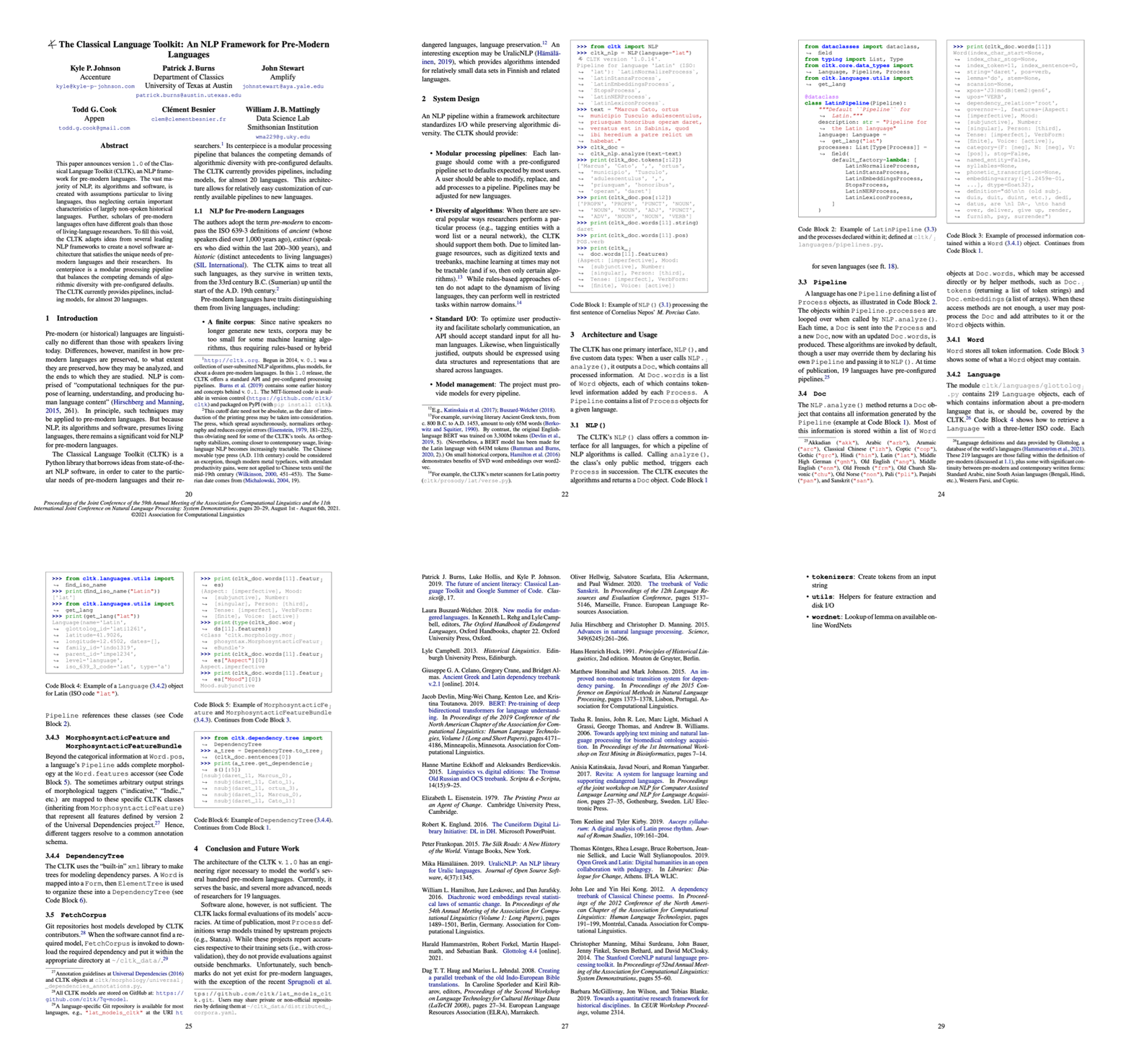 The Classical Language Toolkit: An NLP Framework for Pre-Modern LanguagesIn Proceedings of the 59th Annual Meeting of the Association for Computational Linguistics and the 11th International Joint Conference on Natural Language Processing: System Demonstrations, Aug2021
Abstract
This paper announces version 1.0 of the Classical Language Toolkit (CLTK), an NLP framework for pre-modern languages. The vast majority of NLP, its algorithms and software, is created with assumptions particular to living languages, thus neglecting certain important characteristics of largely non-spoken historical languages. Further, scholars of pre-modern languages often have different goals than those of living-language researchers. To fill this void, the CLTK adapts ideas from several leading NLP frameworks to create a novel software architecture that satisfies the unique needs of pre-modern languages and their researchers. Its centerpiece is a modular processing pipeline that balances the competing demands of algorithmic diversity with pre-configured defaults. The CLTK currently provides pipelines, including models, for almost 20 languages.
BibTeX
@inproceedings{johnson-etal-2021-classical,
  title = {The {C}lassical {L}anguage {T}oolkit: {A}n {NLP} Framework for Pre-Modern Languages},
  author = {Johnson, Kyle P. and Burns, Patrick J. and Stewart, John and Cook, Todd and Besnier, Clément and Mattingly, William J. B.},
  booktitle = {Proceedings of the 59th Annual Meeting of the Association for Computational Linguistics and the 11th International Joint Conference on Natural Language Processing: System Demonstrations},
  month = aug,
  year = {2021},
  address = {Online},
  publisher = {Association for Computational Linguistics},
  url = {https://aclanthology.org/2021.acl-demo.3},
  doi = {10.18653/v1/2021.acl-demo.3},
  pages = {20--29}
}
2012
-
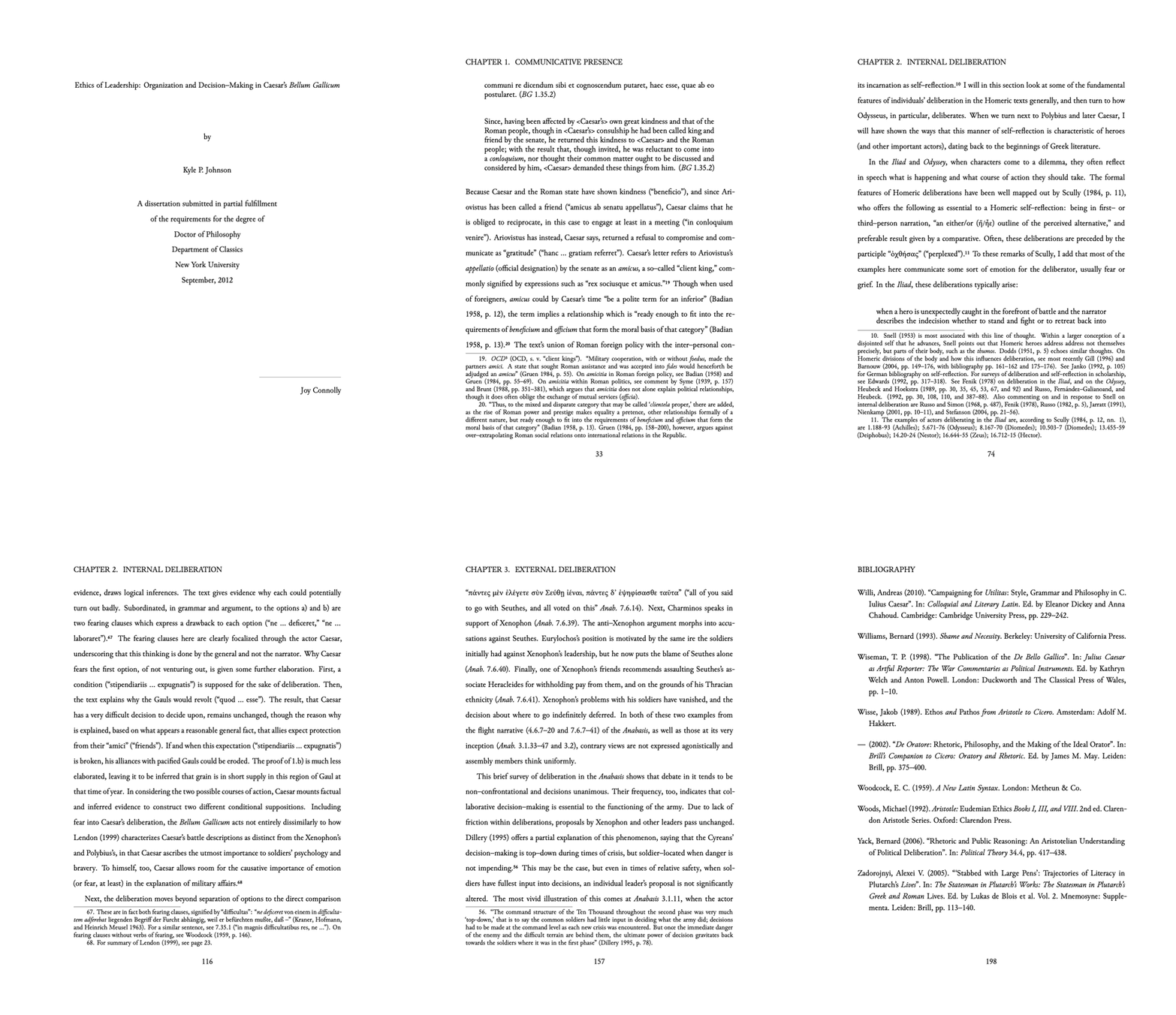 Ethics of Leadership: Organization and Decision-Making in Caesar’s" Bellum Gallicum"New York University, Aug2012
Abstract
This dissertation studies how Julius Caesar represents himself as an ideal leader in the \emphBellum Gallicum. It argues that Caesar achieves this idealized self–portrait through interactional relationships between the general’s mind and his subordinate officers. Chapter 1 analyzes how Caesar communicates with his army and foreigners. In reference to the Greco–Roman literary tradition, Chapter 2 is about the general’s mind and the importance that the text gives to his decision–making process. Chapter 3 looks at episodes in which subordinate officers must deliberate for themselves, and how these independent deliberations ultimately demonstrate the brilliance of Caesar’s organization of the army and his centrality to it. Considered together, the three chapters demonstrate that Caesar’s mind and its manifestation portray Caesar as a uniquely qualified bearer of Roman \emphimperium.
BibTeX
@phdthesis{johnson2012ethics,
  title = {Ethics of Leadership: Organization and Decision-Making in Caesar's" Bellum Gallicum"},
  author = {Johnson, Kyle P},
  year = {2012},
  school = {New York University}
}
2011
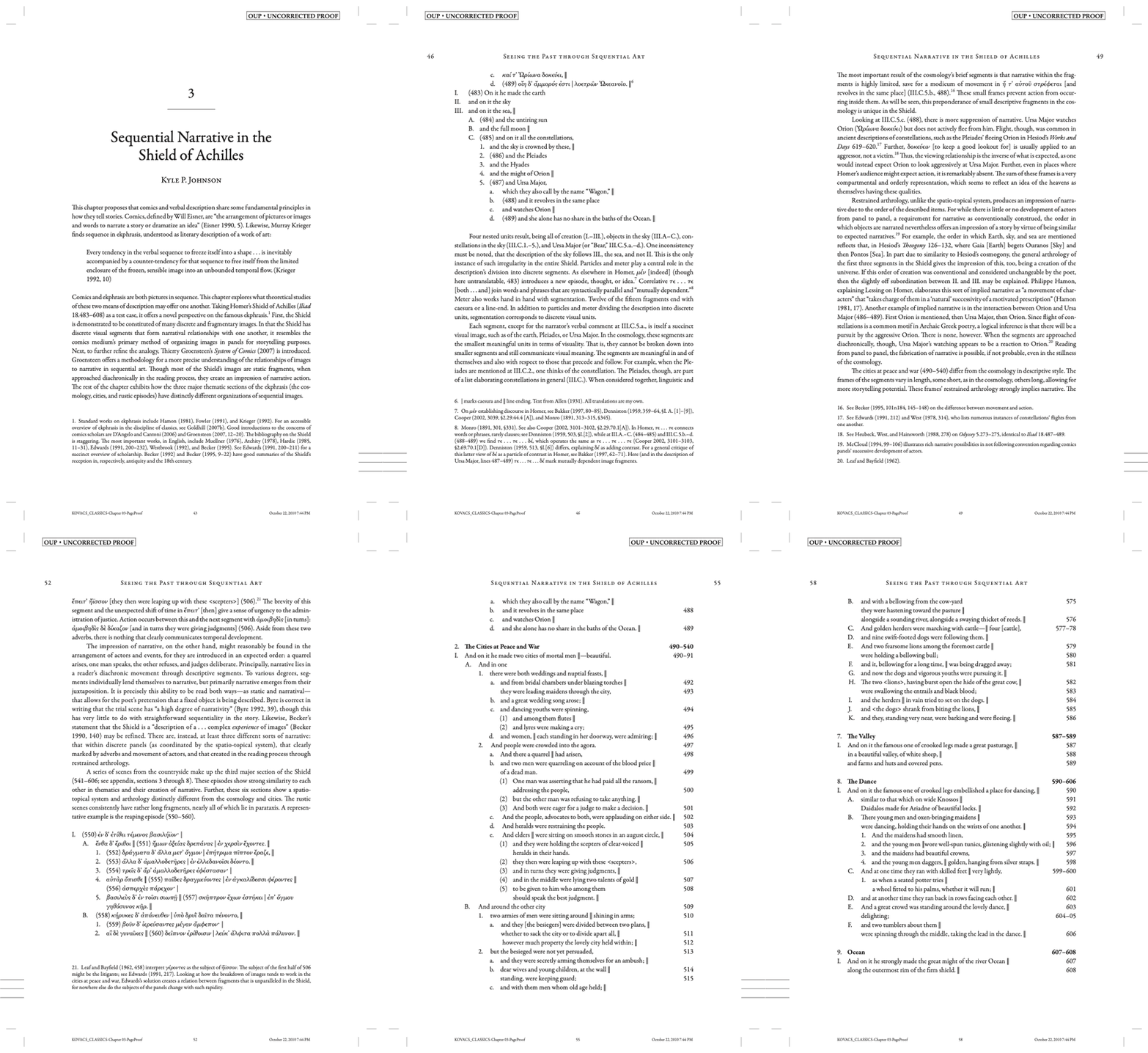
2006
-
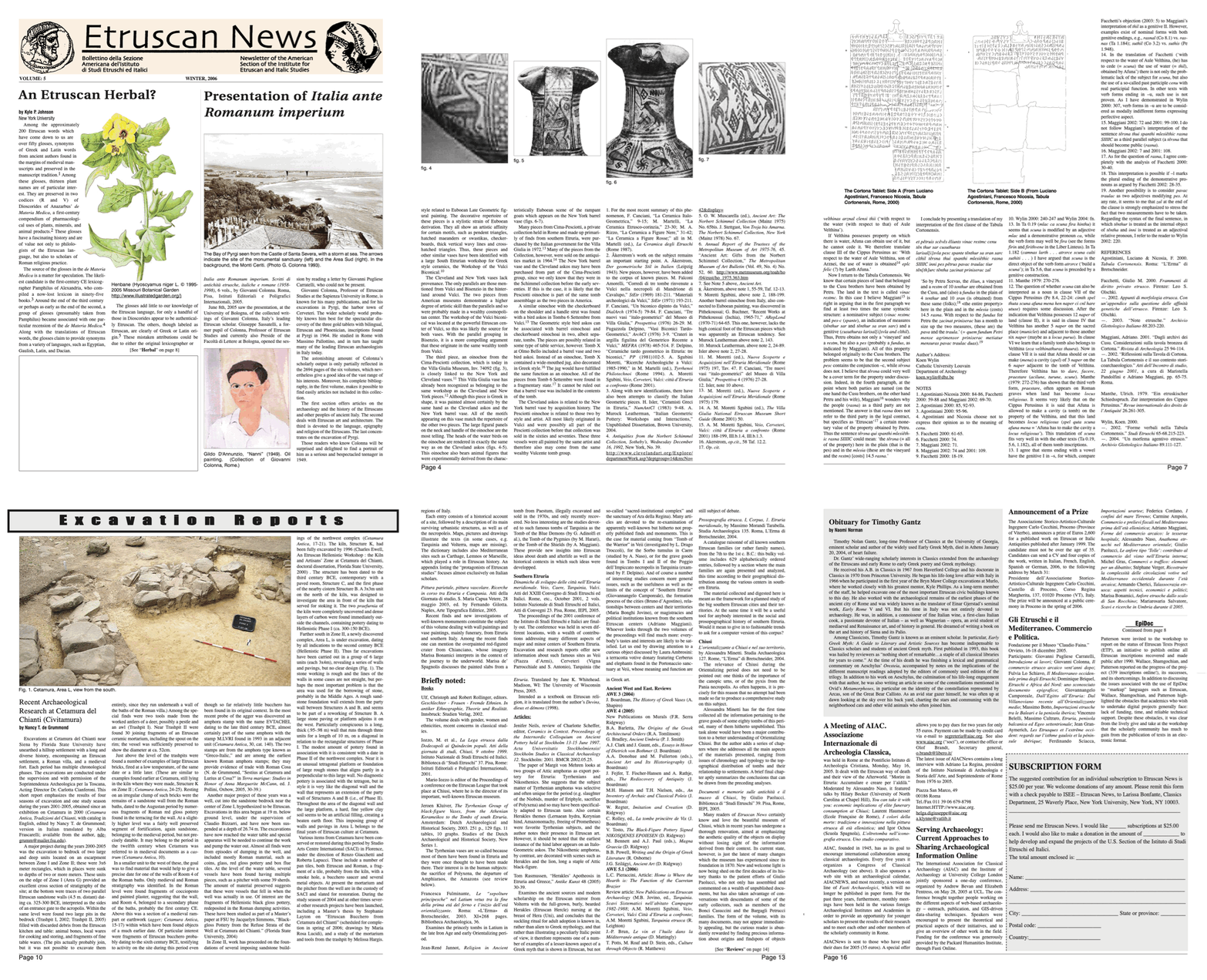 An Etruscan Herbal?Etruscan News, Aug2006
BibTeX
@article{johnson2006etruscan,
  title = {An Etruscan Herbal?},
  author = {Johnson, Kyle P},
  journal = {Etruscan News},
  volume = {5},
  number = {1},
  pages = {8},
  year = {2006}
}